The Role of High-Pressure Spray Systems on Modern Construction Sites
For construction site misting systems in Shandong, high-pressure spraying equipment is now commonly integrated with online dust monitoring systems (PM/TSP sensors) and PLC control hubs. The system automatically activates or deactivates based on preset environmental thresholds or specific wind speed conditions; it also supports remote control via mobile devices and precision operation across distinct zones or groups, enabling intelligent management where spraying triggers immediately upon exceeding limits and stops once levels are compliant.
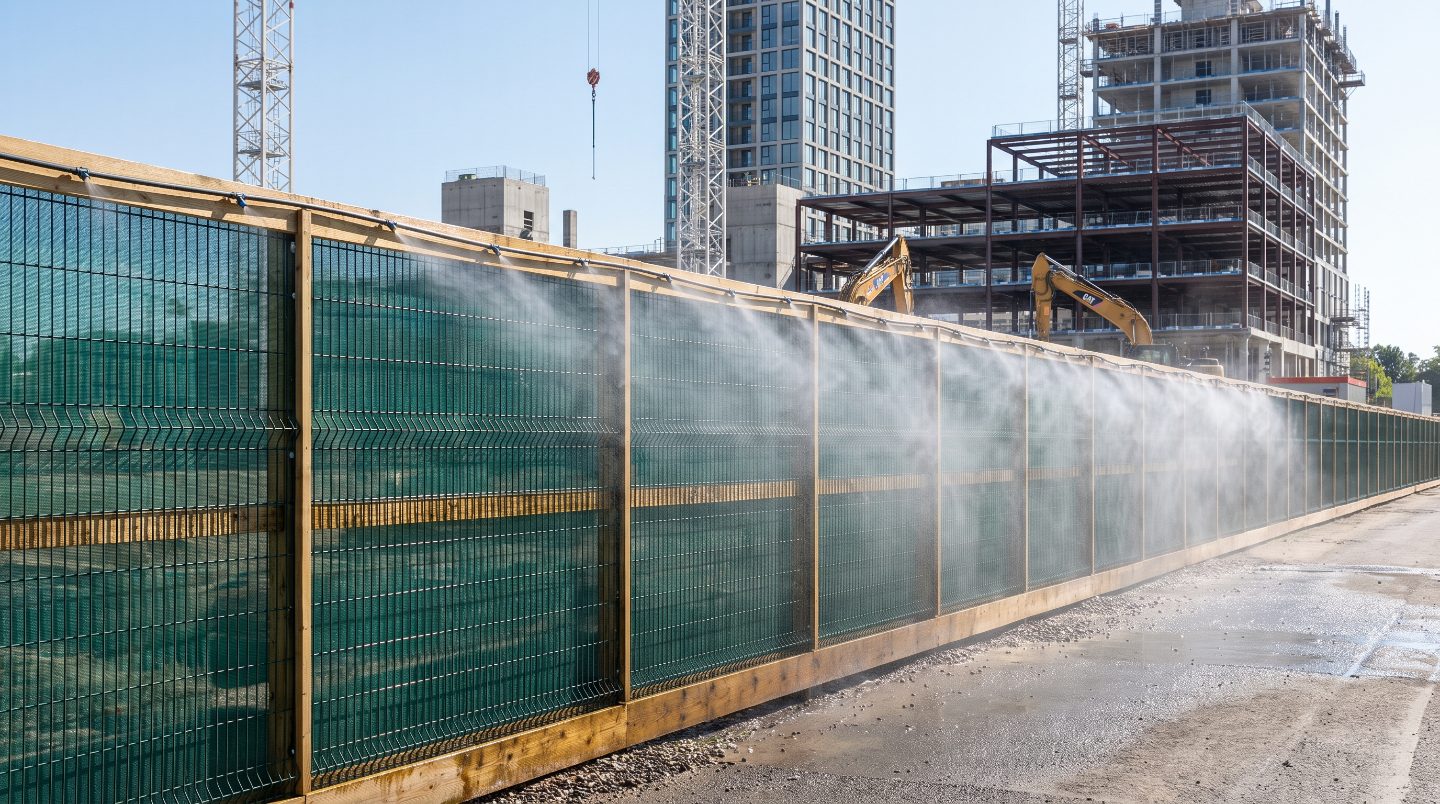
Perimeter Barrier Protection: High-pressure spray lines are installed along the top of the enclosed site hoarding to create a continuous "water-mist barrier," effectively preventing dust from spreading to nearby public roads and residential areas.
Elevated 3D Dust Suppression via Tower Cranes: Rotating spray units are mounted on the tower crane booms; with their wide coverage radius and significant vertical reach, they provide comprehensive, multi-dimensional dust suppression across large-scale earthworks (excavation and backfilling) and structural construction zones.
Main Haul Road and Entrance/Exit Cleaning: Systems deployed along main transport routes and at vehicle wash stations—equipped with automatic sensors—instantly settle airborne dust generated by muck trucks and road traffic while keeping road surfaces moist.
Auxiliary Cooling and Curing: During high-temperature summer operations, the evaporative cooling effect of high-pressure micro-mists can lower the ambient temperature at the work site by 3–5°C, improving conditions for workers; during the main structural construction phase, certain elevated spray systems can also assist in the early-stage moisture curing of concrete structures.
Need help applying this to your project? Talk to our engineering team.